July 3, 2026

Most organisations looking for a web development agency already know they need a new site. What they struggle with is finding one that understands the difference between a site that looks professional and one that actually drives action. For NGOs and purpose-driven businesses, that difference matters more than visual polish. Your website needs to convert visitors, whether that means donations, petition signatures, volunteer sign-ups, or leads. A generic agency treats every project the same. A mission-focused one builds around the outcomes you need.
Generic web development agencies optimise for aesthetics first, functionality second, and mission impact rarely at all. They deliver beautiful landing pages that fail to convert because they don't understand donor psychology, advocacy flows, or the trust signals civil society organisations need to earn credibility.
The difference shows up in how projects are scoped. A typical agency asks about brand colours and preferred layouts. A mission-focused one asks who your audience is, what action you need them to take, and what's currently stopping them. That shift in questioning leads to fundamentally different websites.
Key gaps in generic agency approaches:
According to recent industry analysis, the biggest shift in web development isn't new technology but how agencies deliver value. Automation handles routine tasks. Strategy and context separate agencies that matter from those being replaced by page builders.
NGOs operate in a different conversion environment than commercial businesses. Trust precedes action. Credibility takes time to establish. Visitors often arrive sceptical, looking for proof before they commit anything, time, money, or personal data.
Your web development agency needs to design for that reality. That means longer consideration journeys, more transparent communication about how funds are used, and clearer connections between individual actions and collective impact. Commercial conversion tactics fall flat because they ignore the emotional and ethical calculations mission audiences make.

| Commercial Website Priority | Mission-Driven Website Priority |
|---|---|
| Fast checkout process | Trust-building transparency |
| Product features and benefits | Impact stories and proof points |
| Conversion rate optimisation | Relationship and credibility building |
| Sales-driven CTAs | Mission-aligned calls to action |
| Brand differentiation | Values demonstration |
A mission-focused web development agency builds differently from the start. The technical architecture supports long-term sustainability, not just launch day performance. That distinction matters when budgets are tight and internal tech capacity is limited.
Platform choice alone changes outcomes. WordPress might be familiar, but it requires constant maintenance. A headless CMS offers more flexibility but adds complexity. For most NGOs, the right answer sits somewhere between ease of use and future scalability. Your agency should explain trade-offs honestly, not push their preferred stack regardless of your needs.
Site speed impacts more than search rankings. For mission work, it determines whether your content reaches audiences in low-bandwidth regions. If your advocacy spans the Global South or serves communities with limited connectivity, performance isn't optional.
Accessibility follows the same logic. WCAG compliance isn't just legal protection, it's mission alignment. Excluding people with disabilities from your digital presence contradicts most mission statements. A competent web development agency treats accessibility as baseline, not an add-on.
Research on web testing methodologies shows that automated testing tools catch technical issues but miss context-specific problems. Your agency should combine automated checks with manual testing that reflects how your actual audience uses the site.
Conversion optimisation in the commercial world focuses on reducing friction. For mission work, some friction builds trust. Asking a visitor why they care before they donate isn't a barrier, it's an engagement opportunity that deepens connection.
A skilled web development agency designs around these nuances. Donation forms include impact calculators. Volunteer sign-ups explain what happens next. Petition pages show real-time signature counts and social proof. Each element reinforces that individual actions contribute to something larger.
Positioning research for web development agencies emphasises specialisation as the antidote to commoditisation. Agencies that understand your sector build better solutions because they've solved similar problems before. They know which patterns work and which assumptions to challenge.
Most web forms are designed to collect data efficiently. Mission-driven forms need to build relationships simultaneously. That means explaining why each field matters, showing how information will be used, and respecting the vulnerability inherent in asking people to care publicly about a cause.
Effective form design for mission work includes:
If you're designing and building websites that convert, inform, and represent the organisation accurately, the web development work needs to account for these mission-specific requirements from the first wireframe.
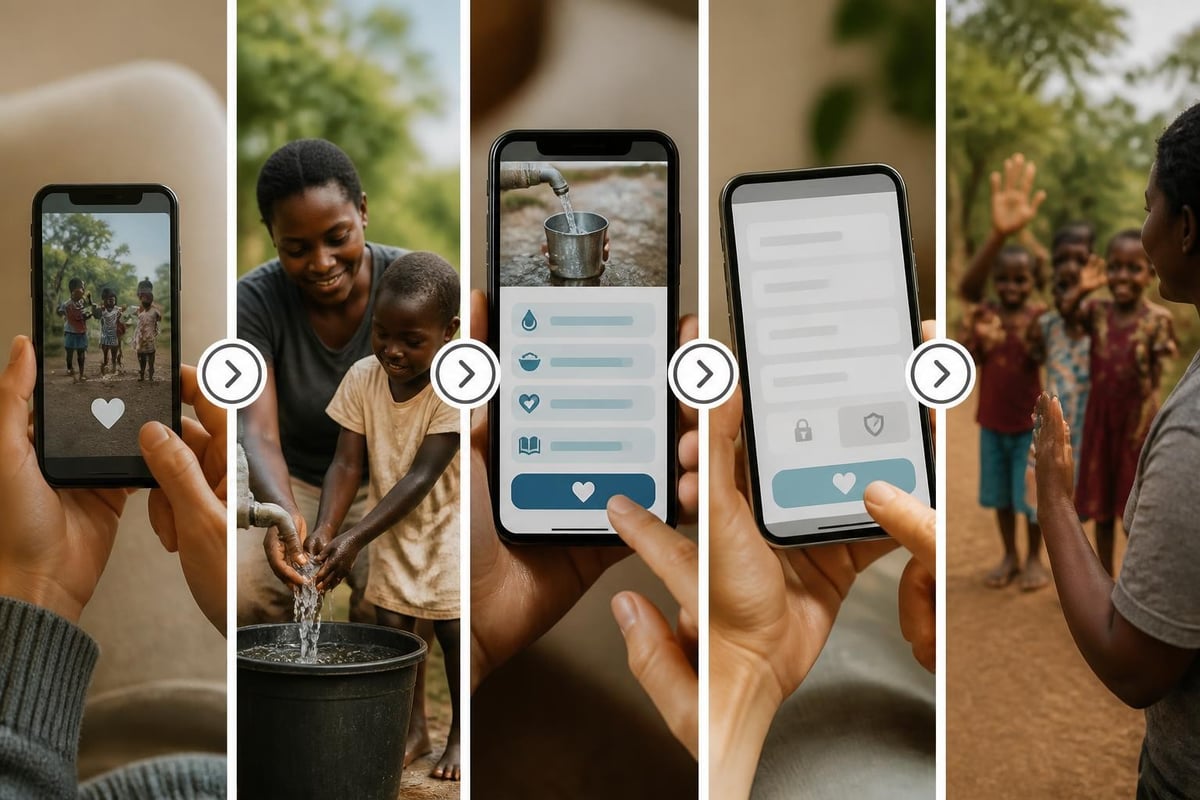
A web development agency can build perfect code, but if the information architecture doesn't match how your audience thinks, the site fails. Mission organisations often structure content around internal departments. Visitors think in terms of problems, solutions, and proof.
Your agency should challenge proposed site maps. If your navigation mirrors your org chart, you're making visitors work too hard. They shouldn't need to understand your structure to find what they need.
Commercial content focuses on features and benefits. Mission content needs stories that demonstrate impact without exploiting the people you serve. That balance requires careful planning and often means working with communities to shape how their stories are told.
The technical implementation matters as much as the narrative. Video testimonials need captions and transcripts. Photo galleries require thoughtful alt text. Impact data needs context that helps visitors understand scale and significance.
| Content Type | Commercial Use | Mission-Driven Use |
|---|---|---|
| Testimonials | Social proof of product quality | Authentic impact stories with consent |
| Data visualisation | Feature comparison and metrics | Impact scale and transparency demonstration |
| Video content | Product demos and ads | Storytelling and advocacy evidence |
| Case studies | Client success and sales enablement | Programme effectiveness and community voice |
| Blog articles | SEO and thought leadership | Education, advocacy, and movement building |
The My Return Campaign case study demonstrates how digital infrastructure supports advocacy at scale, generating over 1 million petition signatures and 110 million impressions through strategic content and technical execution working together.
Choosing the right platform determines what's possible years after launch. A web development agency focused on short-term delivery might push whatever they're most comfortable building. One thinking about your long-term needs weighs maintenance burden, internal capacity, and future flexibility.
WordPress powers a third of the web for good reason. It's familiar, well-documented, and supported by thousands of plugins. It's also a maintenance commitment. Security updates, plugin compatibility, and performance optimisation require ongoing attention.
Static site generators offer speed and security advantages but limit who can update content. Headless CMS platforms provide flexibility at the cost of complexity. The right choice depends on your team's technical comfort and how often content changes.
You should own your website fully. That means access to all code, hosting credentials, domain control, and backups. Some agencies retain ownership as leverage for ongoing contracts. That's not a partnership, it's a dependency.
Ask about migration paths before you commit. If you need to change agencies later, how difficult will the transition be? Can you export content cleanly? Are there proprietary dependencies that lock you in?
Essential ownership and access rights:
Expert insights on selecting website builders for agencies highlight workflow integration and collaboration features as critical factors, particularly for teams working across offices and time zones.
The web development agency sector is transforming rapidly. AI tools automate tasks that used to consume billable hours. Studies show 76% of web design professionals now fear AI more than shrinking budgets, recognising that routine work is increasingly commoditised.
For clients, this shift creates opportunity. Agencies that adapt use automation to reduce costs and focus human expertise on strategy, not repetitive tasks. Those that resist either charge the same for less value or compete on price alone.
The question isn't whether your web development agency uses AI tools. It's whether they use them to deliver better outcomes or just maintain margins. Code generation tools can accelerate development. AI-powered testing catches bugs faster. Content assistance helps with accessibility improvements.
Strategy, context, and mission alignment can't be automated. Understanding donor psychology, advocacy flow design, and trust-building architecture requires human judgment informed by experience. A good agency combines automated efficiency with strategic thinking that addresses your specific context.
Industry analysis suggests 52% of web professionals identify AI as the key trend impacting their work in 2026. The agencies thriving in this environment position themselves as strategic partners, not just service providers.

Most RFP processes favour agencies good at proposals over those good at delivery. You end up comparing polished presentations instead of actual capability. A better approach focuses on work samples, reference conversations, and how agencies think through problems in real time.
Ask to see sites they've built for similar organisations. Not the portfolio highlights, the full project list. Check how those sites perform now, not just how they looked at launch. Talk to references about the relationship, not just the deliverable.
Generic questions get generic answers. Specific scenarios reveal how an agency actually works. Present a real challenge your organisation faces and ask how they'd approach it. Their answer shows more than any case study.
Strategic evaluation questions:
The hosting infrastructure agencies choose impacts long-term performance and cost. Ask about their hosting recommendations and whether they have partnerships that might influence those suggestions.
Web development costs vary wildly because scope varies wildly. A five-page brochure site costs less than a donation platform with CRM integration, multilingual content, and advocacy tools. Agencies that quote without thorough discovery either pad estimates or deliver surprise invoices later.
Cheap isn't always expensive and expensive isn't always worth it. Value comes from alignment between what you need and what you get. A £15,000 site that converts well outperforms a £50,000 site that looks impressive but fails to drive action.
Custom functionality costs more than template implementations. Complex integrations cost more than standalone sites. Ongoing support costs more than one-time builds. Understanding these variables helps you prioritise spending where it matters most for your mission.
| Investment Area | Impact on Mission Outcomes | Typical Cost Driver |
|---|---|---|
| Strategy and discovery | High (sets everything else) | Time and expertise |
| Custom conversion flows | High (drives action) | Development and testing |
| Content migration | Medium (preserves SEO) | Volume and complexity |
| Visual design | Medium (builds trust) | Revisions and customisation |
| Third-party integrations | Variable (depends on tools) | API complexity and licensing |
| Training and documentation | High (enables independence) | Thoroughness and format |
Analysis of whether AI could end web agencies suggests the future belongs to agencies that transition from basic service delivery to strategic partnership. That shift changes how value is measured and what's worth paying for.
Launch day is the beginning, not the end. Your web development agency should plan for what comes after. How will you test assumptions? What metrics matter? How do you prioritise improvements based on actual user behaviour rather than internal opinions?
A mature approach includes analytics implementation, conversion tracking, user testing protocols, and a roadmap for iterative improvements. Sites that succeed long-term evolve based on evidence, not executive preferences.
Agencies offering this kind of partnership think differently about deliverables. They're not just handing over a finished product, they're establishing a foundation you can build on. That includes documentation, training, and often an ongoing relationship that supports growth as your mission expands.
Post-launch success factors:
The broader digital marketing strategy your site supports determines what success looks like and which improvements deliver the most impact.
Finding a web development agency that understands mission work means looking beyond portfolio polish to strategic thinking and sector experience. Your site needs to convert visitors while building the trust that makes conversion possible, a balance generic agencies rarely achieve. Threems Agency builds websites for NGOs and purpose-driven organisations that need digital infrastructure supporting real impact, from donation platforms to advocacy tools and everything between. If your current site isn't driving the action your mission needs, we should talk.