August 1, 2026


Most social media marketing agencies promise reach. The better ones deliver engagement. But the agencies worth working with understand that for mission-driven organisations, social media isn't just distribution, it's a tool for building movements, influencing policy, and turning passive observers into active supporters. That distinction changes everything: the platforms you prioritise, the content you produce, and the metrics that actually matter.
A social media marketing agency manages your presence across platforms, but the definition stops being useful there. The work splits into three core functions: strategy development, content production, and performance management. Each requires different skills, and not every agency handles all three with equal competence.
Strategy development means deciding which platforms serve your goals, who you're speaking to, and what you're asking them to do. For an NGO running an advocacy campaign, that might mean LinkedIn for policy influencers, Instagram for younger supporters, and Facebook for community organising. A business might need Twitter for thought leadership and LinkedIn for lead generation. The choice isn't about being everywhere, it's about being where your audience already gathers.
Content production covers everything from graphics and video to copy and scheduling. This is where many agencies default to templates and recycled formats. The agencies that produce work worth engaging with treat each piece of content as part of a larger narrative. A single Instagram post isn't just filling a calendar slot, it's advancing a story, reinforcing a position, or prompting a specific action.
Performance management tracks what's working and adjusts accordingly. That includes monitoring engagement rates, follower growth, click-throughs, and conversions. But it also means understanding platform algorithms, responding to shifts in reach, and adapting content strategy when audience behaviour changes. According to Sprout Social's 2026 best practices, brands that regularly review and refine their workflows see measurably better performance than those running on autopilot.

Plenty of agencies offer social media management. Fewer offer strategy. The distinction matters.
Management is operational. It means:
Strategy is structural. It includes:
An agency focused purely on management will keep your accounts active. An agency leading with strategy will make those accounts work toward a measurable outcome. For NGOs, that outcome might be petition signatures, event registrations, or policy engagement. For businesses, it could be lead generation, brand awareness in a new market, or customer retention.
Not all agencies are built the same. Some specialise in e-commerce brands, others in B2B, and a few focus on mission-driven organisations. The agency you choose should understand the specific pressures and opportunities in your sector.
| Agency Type | Strengths | Limitations |
|---|---|---|
| Generalist | Broad platform knowledge, flexible pricing | Often lack sector-specific insight, especially for advocacy or nonprofit work |
| E-commerce Focused | Strong on conversion tracking, paid social, product marketing | May struggle with narrative-driven campaigns or cause-based messaging |
| Mission-Driven Specialist | Understands donor psychology, advocacy tactics, and impact storytelling | Smaller client rosters, may have limited capacity during peak campaign periods |
Ask potential agencies to walk you through a past campaign. Not the result, the process. How did they decide on platform mix? What informed their creative direction? How did they measure success beyond reach and impressions? Agencies that lead with flashy case study numbers but can't explain the thinking behind the work are selling outcomes they may not be able to replicate.
For organisations operating across regions, ask about localisation. A campaign that works in the UK won't necessarily translate to the GCC or Arab markets without adjustment. Cultural context, platform preference, and content format all shift across geographies. Agencies with experience in your target regions will know which adjustments matter and which don't.
Some warning signs show up early in conversations with agencies. If they promise follower growth without asking about your audience, walk away. If their pricing model is based purely on post volume rather than outcomes, that's a sign they're focused on activity rather than impact.
Agencies that can't clearly explain their reporting structure are another concern. You should know, upfront, what metrics you'll receive, how often, and in what format. Effective social media workflows include regular performance reviews, not just data dumps at the end of a contract period.
Different platforms serve different functions. Trying to be equally active everywhere dilutes effort and budget. The better approach is to identify two or three platforms where your audience is most active and most likely to take action, then commit to doing those well.
Facebook still dominates for community organising and event promotion, especially among older demographics and in certain regions. It's where people join groups, RSVP to events, and share long-form updates. For NGOs, it remains the strongest platform for peer-to-peer fundraising and volunteer coordination.
Instagram works for visual storytelling and reaching younger supporters. It's where impact is shown, not just explained. Videos, reels, and carousel posts that document fieldwork, share testimonial stories, or illustrate data in accessible formats perform consistently well. The platform rewards authenticity over polish, which plays to the strengths of mission-driven content.
LinkedIn is underused by many NGOs but increasingly valuable for policy advocacy, thought leadership, and connecting with institutional donors or corporate partners. Articles, white papers, and data-driven posts reach decision-makers more effectively here than on any other platform.
Twitter (X) remains relevant for real-time advocacy, media engagement, and public discourse. It's where journalists, policymakers, and activists congregate. Campaigns designed to influence public conversation or media coverage still need a presence here, even as the platform's broader user base shifts.
TikTok offers unmatched reach among Gen Z audiences, but success requires a different content approach. The platform rewards creativity, humour, and trends over polished messaging. For organisations trying to reach younger demographics, it's worth the investment, but only if you're willing to adapt tone and format significantly.
The content that drives action is rarely the content that took the longest to produce. Overproduced videos with generic messaging underperform scrappy, authentic clips that show real people affected by real issues.
According to research on social media best practices, audiences engage more with content that prioritises clarity and relevance over production value. That doesn't mean poor quality is acceptable. It means investing in storytelling, not just cinematography.
For NGOs, that might look like:
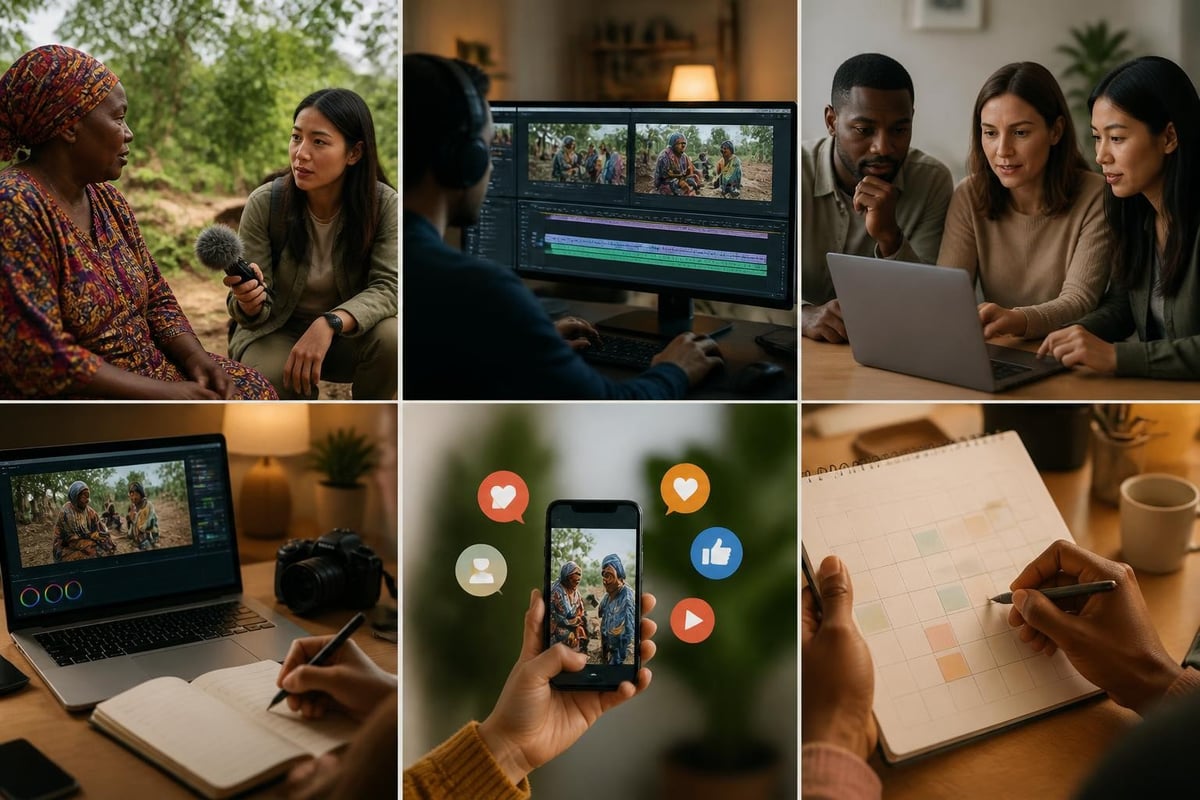
Social media doesn't exist in isolation. It works best when integrated with your wider marketing strategy, supporting and amplifying other channels rather than operating as a standalone effort.
Email campaigns drive traffic to social posts. Social posts drive sign-ups for email lists. Blog content gets distributed through social channels. Social engagement informs content topics for the blog. Paid social ads retarget website visitors. The connections multiply when channels are planned together rather than managed separately.
Many NGOs treat social media as the communications team's responsibility and web content as the programme team's domain. That split creates gaps. A campaign page that doesn't link to social profiles misses an engagement opportunity. A social campaign that doesn't direct people to a clear next step on the website wastes momentum.
Agencies that understand 360° multi-channel marketing build social strategies that connect to everything else you're doing. That might mean aligning social content calendars with email send schedules, coordinating paid social with SEO-driven blog launches, or timing advocacy pushes to coincide with media outreach.
Tracking likes and shares tells you almost nothing about impact. Better metrics depend on what you're trying to achieve.
For awareness campaigns:
For engagement campaigns:
For conversion campaigns:
The metrics you prioritise should map directly to campaign goals. If the goal is policy influence, tracking how many policymakers engaged with your content matters more than total follower count. If the goal is donor acquisition, tracking cost per new donor from social channels tells you whether the investment is working.
Some organisations hire a social media marketing agency to fill a gap. Others do it to scale beyond what an in-house team can manage alone. The decision depends on your current capacity, budget, and long-term goals.
If your organisation has the budget for a dedicated social media manager and the content volume is manageable, building in-house capability often makes sense. You gain someone who knows your mission deeply, can respond in real-time during crises, and builds institutional knowledge over time.
In-house teams work best when:
Agencies bring specialised skills that are hard to hire for or retain in-house. That includes platform advertising expertise, video production, data analysis, and multi-market campaign coordination. For organisations running high-stakes campaigns or expanding into new regions, an agency offers both capacity and capability.
Case studies across industries show that agencies tend to deliver stronger results when they're treated as strategic partners rather than task executors. That means involving them early in campaign planning, sharing access to performance data across channels, and allowing them to challenge assumptions rather than just implement requests.

Even well-intentioned organisations fall into predictable traps when managing social media or working with agencies. Recognising these patterns early prevents wasted budget and missed opportunities.
Posting without purpose. Filling a content calendar because you feel obligated to post daily achieves nothing. Every piece of content should serve a clear function: building awareness, driving engagement, or prompting action. If you can't articulate why you're posting something, don't post it.
Ignoring platform-specific behaviour. Content that works on LinkedIn rarely works on Instagram without adaptation. Agencies that repurpose content across platforms without adjusting format, tone, or length are wasting your budget. Platform-specific best practices should inform how content is created, not just where it's posted.
Chasing trends that don't fit your mission. Jumping on viral challenges or trending audio might boost short-term engagement, but if it dilutes your message or confuses your audience about what you stand for, it's counterproductive. Trends work when they amplify your existing narrative, not replace it.
Treating all followers equally. A follower who never engages is worth less than someone who comments, shares, and takes action. Agencies should focus on growing the right audience, not just any audience. Segmentation tools and targeted content help cultivate communities that actually care about your mission.
Underinvesting in creative. Stock photos and templated graphics signal that you're not taking the platform seriously. Audiences scroll past generic content without a second thought. Investing in original visuals, whether through brand development or campaign-specific creative, increases both engagement and credibility.
Platform algorithms evolve, user behaviour shifts, and what worked last year doesn't always work this year. Agencies worth their retainer stay ahead of these changes rather than reacting to them months later.
Video continues to dominate. Platforms increasingly prioritise video content in their algorithms, particularly short-form vertical video. Organisations that haven't yet built video production into their content strategy are competing with one hand tied. That doesn't mean every post needs to be a video, but it does mean video should be a regular, planned part of your content mix.
AI tools are reshaping content production. From automated caption generation to image creation and performance prediction, AI is making certain tasks faster and cheaper. But the tools are only useful if strategy still leads. AI-driven social media marketing works when it amplifies human creativity, not replaces it.
Platform fragmentation is accelerating. Audiences are spreading across more platforms, and the dominance of Facebook and Instagram is weakening among younger demographics. Agencies need multi-platform expertise, not just proficiency in one or two networks. Cross-platform campaign coordination is becoming a core competency, not a nice-to-have.
Authenticity remains non-negotiable. Audiences, especially younger ones, have finely tuned filters for corporate speak and performative activism. Mission-driven organisations have an advantage here, but only if their content genuinely reflects their work rather than what they think people want to hear.
The right tools don't replace good strategy, but they make execution significantly easier. Social media management platforms offer scheduling, analytics, and collaboration features that streamline workflows and improve consistency.
Scheduling tools like Hootsuite, Buffer, or Sprout Social allow teams to plan content in advance, coordinate multi-platform posts, and maintain consistent publishing even during busy periods. For organisations running time-sensitive advocacy campaigns, scheduling ensures content goes live at optimal times without requiring manual intervention.
Analytics platforms provide deeper insight than native platform tools. They consolidate data across channels, track performance over time, and identify patterns that inform future strategy. Agencies should be using these tools to generate regular reports that connect activity to outcomes, not just list metrics.
Collaboration tools matter when multiple people contribute to content creation. Approval workflows, comment threads, and version control prevent miscommunication and ensure brand consistency. For NGOs with legal or compliance requirements, documented approval processes also provide accountability.
Social media marketing agencies succeed when they treat platforms as tools for achieving specific goals, not ends in themselves. For NGOs and mission-driven organisations, that means finding partners who understand that reach without impact is just noise. Whether you're building your first social presence or scaling an existing operation across new markets, the right agency should challenge you to think strategically, execute consistently, and measure what matters. Threems Agency builds social strategies for NGOs and purpose-driven businesses across the UK, Europe, GCC, and Arab markets, connecting platforms, content, and campaigns into coherent systems that move people to act, not just scroll.