July 13, 2026


A social marketing expert doesn't just promote causes. They engineer behaviour change by combining marketing discipline with social science, treating public attitudes and actions as outcomes to be shaped, not just messages to be broadcast. For NGOs and mission-driven organizations, this means campaigns that do more than raise awareness. They shift norms, change habits, and create measurable impact in the communities they serve.
A social marketing expert applies commercial marketing principles to social good. The discipline emerged in the 1970s when public health practitioners realized that advertising techniques could encourage healthier behaviours just as effectively as they sold products. Today, it spans everything from vaccine uptake to environmental conservation, domestic violence prevention to refugee integration.
The International Social Marketing Association defines the field as using marketing to influence behaviour that benefits individuals and communities. That distinction matters. Unlike traditional advocacy, which often aims to change policy or raise funds, social marketing targets individual and collective behaviour. A social marketing expert measures success not in impressions or donations, but in adoption rates, habit formation, and sustained change.
Expertise in this field requires a blend of skills that most agencies either lack or silo across different departments:
A social marketing expert working with NGOs must also navigate limited budgets and ethical considerations that don't constrain commercial marketers. You can't manipulate people into change. You have to design interventions that make the desired behaviour easier, more attractive, or more socially acceptable than the alternative.

Most advocacy campaigns stop at awareness. A social marketing expert builds past that, designing touchpoints that reduce friction and reward action.
Before launching any intervention, a social marketing expert conducts formative research to understand current behaviours, barriers, and motivations. This isn't a desk exercise. It involves interviews, observation, and testing assumptions in the field. For an NGO promoting recycling in low-income neighbourhoods, formative research might reveal that lack of bins matters more than lack of awareness. That single insight changes everything.
The global consensus on social marketing principles emphasizes customer orientation, which means designing interventions around the audience's actual context, not the organization's assumptions. If your target audience doesn't trust government messaging, partnering with community leaders becomes essential. If they're time-poor, convenience trumps education.
| Research Method | Purpose | When to Use |
|---|---|---|
| Focus groups | Uncover attitudes, language, and social norms | Early exploration, message testing |
| Surveys | Quantify prevalence of behaviours and barriers | Segmentation, baseline measurement |
| Observational studies | Understand real-world context and decision points | Intervention design, identifying friction |
| Pilot testing | Validate effectiveness before scale | Before full campaign launch |
Not everyone is equally ready to change. A social marketing expert segments audiences by stage of change: precontemplation, contemplation, preparation, action, and maintenance. Each stage requires different messaging and support.
For an NGO encouraging climate action, this might mean:
Trying to move everyone at once dilutes impact. A social marketing expert prioritizes segments most ready to change, then designs interventions specific to each group's barriers and motivations.
Social marketing borrows the 4Ps from commercial marketing but reinterprets them for behaviour change.
Product is the desired behaviour and its benefits. A social marketing expert positions behaviour change as offering something valuable: better health, social status, environmental impact, or community belonging. The "product" also includes tangible support like free condoms, recycling bins, or nicotine patches.
Price isn't just financial cost. It's effort, time, social risk, and psychological discomfort. Reducing price means making the behaviour easier. If you want people to register as organ donors, embedding the option in driving licence renewal reduces friction. If you want businesses to hire refugees, offering training subsidies and cultural integration support lowers perceived risk.
Place is where the behaviour happens and where you deliver interventions. For public health campaigns, that might be clinics, schools, or social media. For environmental campaigns, it could be retail locations, community events, or workplaces. A social marketing expert maps decision points and ensures the intervention appears where people are already making related choices.
Promotion is the communication strategy, but it's the last P, not the first. Too many campaigns lead with messaging before understanding product, price, and place. A social marketing expert designs creative and channels only after nailing the offer and reducing barriers.

A social marketing expert tracks behaviour, not vanity metrics. Impressions and engagement matter only if they lead to measurable action.
Effective evaluation starts with clear objectives tied to specific, observable behaviours. "Increase awareness of mental health resources" is an output. "Increase the percentage of students who access counselling services within two weeks of a crisis" is an outcome.
Your measurement framework should include:
For NGOs, this often means combining surveys, administrative data, and observational studies. If you're running a campaign to reduce single-use plastics, you might track sales data from local retailers, conduct waste audits, and survey community members about their purchasing habits.
| Metric Type | Example | Why It Matters |
|---|---|---|
| Reach | 50,000 people saw the campaign | Confirms audience exposure |
| Engagement | 5,000 people attended workshops | Shows active interest |
| Behaviour change | 30% reduction in plastic bag use | Demonstrates real impact |
| Maintenance | 80% still using reusables after 6 months | Proves sustainability |
The evolution of social marketing now incorporates design thinking and co-creation, which means involving target audiences in developing interventions and defining success metrics. When communities help design the evaluation, they're more invested in both the campaign and its outcomes.
Not every campaign needs this level of rigour. Awareness campaigns, fundraising appeals, and policy advocacy have their place. But when your goal is sustained behaviour change across a population, a social marketing expert becomes essential.
You're running campaigns that generate buzz but don't shift behaviours. People know about your cause but aren't taking action. You're repeating interventions that worked elsewhere but failing to see results in your context. Your messaging is polished but your audience segments are broad and untested.
A social marketing expert brings structure to what otherwise becomes guesswork. They introduce research methods, behaviour change models, and evaluation frameworks that turn campaigns into evidence-based interventions. For organizations working across the UK, Europe, GCC, and Arab world markets, they also adapt strategies to local norms, languages, and regulatory environments without losing fidelity to the core approach.
When building marketing strategy for mission-driven work, integrating social marketing principles ensures every campaign decision ties back to behavioural goals, not just creative instincts.
Commercial marketers can use persuasion techniques that blur into manipulation. A social marketing expert operates under stricter ethical standards because the goal is public benefit, not profit.
Interventions must respect individual autonomy. You can make desired behaviours easier or more attractive, but you can't deceive or coerce. If you're promoting a health behaviour, disclose any conflicts of interest. If you're using social proof, ensure testimonials are genuine. If you're framing choices, offer balanced information.
The ethical guidelines from the International Social Marketing Association emphasize that campaigns should never exploit vulnerable populations, use fear without offering solutions, or prioritize organizational goals over community wellbeing.
Behaviour change campaigns can backfire. Anti-smoking messages that emphasize how many people smoke can normalize the behaviour. Recycling campaigns that overemphasize individual action can let corporations off the hook for systemic pollution. A social marketing expert anticipates these risks through pretesting and ongoing monitoring.
A social marketing expert working internationally doesn't just translate campaigns. They adapt interventions to local contexts while maintaining evidence-based principles.
Behaviour change drivers vary by culture. In some regions, family approval drives health decisions. In others, individual autonomy matters more. Social norms around gender, authority, and community shape how people respond to messaging. A campaign promoting girls' education might emphasize economic benefits in one market and family honour in another, both grounded in local research.
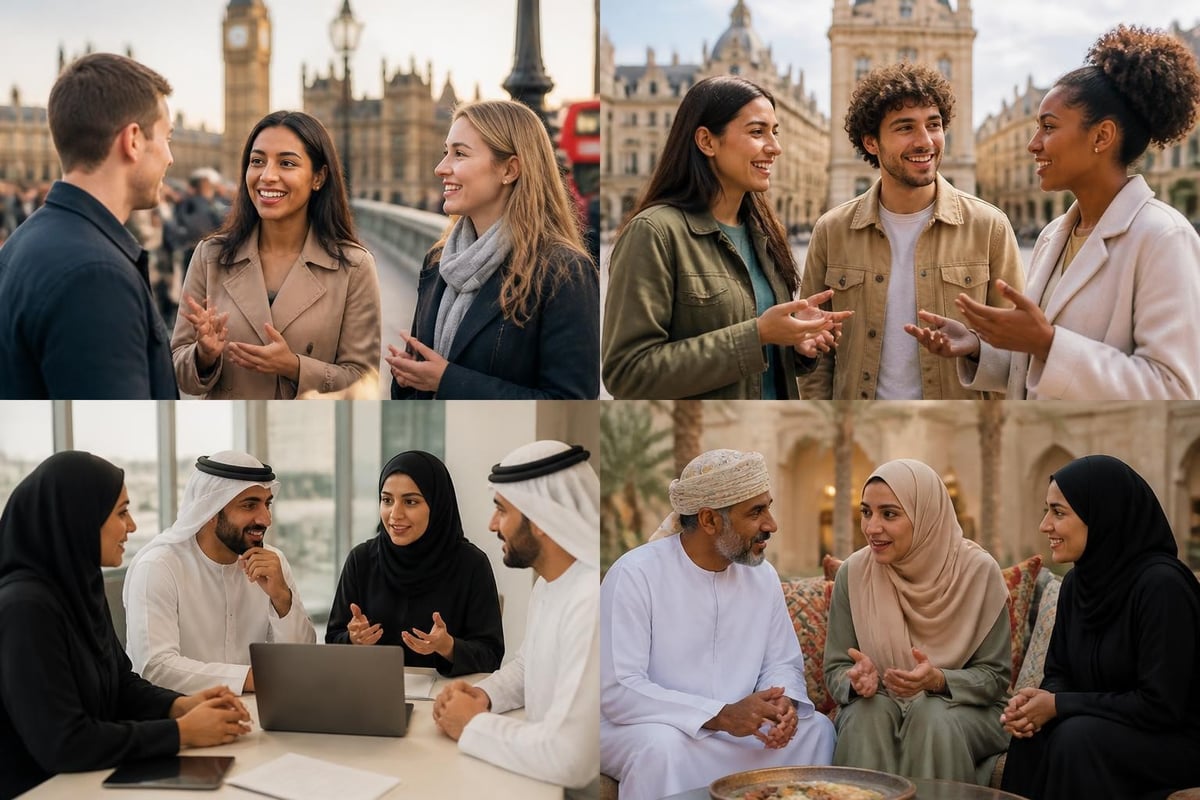
This requires investing in formative research for each geography. Assumptions from the UK won't transfer cleanly to the GCC or Arab world markets. A social marketing expert builds local partnerships, engages community stakeholders, and tests interventions before scaling.
Not every organization can hire a dedicated social marketing expert, but you can build capacity within your team.
Start with behaviour change fundamentals. Staff should understand basic models like the Health Belief Model, Theory of Planned Behaviour, and Social Cognitive Theory. Free resources from the International Social Marketing Association and the social marketing community offer courses, webinars, and case studies.
Next, invest in research skills. Your team doesn't need PhDs, but they should know how to design surveys, conduct interviews, and interpret data. Many universities offer short courses in qualitative and quantitative research methods.
Build evaluation into every campaign from the start. Even small pilots should include pre and post measurements. Over time, your organization develops a portfolio of evidence about what works, which informs future strategy.
| Skill Area | How to Build It | Timeline |
|---|---|---|
| Behaviour change theory | Online courses, reading key texts | 3-6 months |
| Formative research | Partner with academic institutions | Ongoing |
| Data analysis | Training in survey tools and analytics platforms | 6-12 months |
| Ethical review | Develop internal guidelines, consult standards | 1-3 months |
For organizations that need immediate expertise, working with an agency experienced in digital marketing for civil society can bridge the gap while internal capacity develops.
Social marketing doesn't replace brand building, fundraising, or advocacy. It complements them by focusing on the behaviour change component of your mission.
An NGO working on homelessness might run three parallel efforts: advocacy to change housing policy, fundraising to support shelters, and social marketing to reduce stigma and increase public support for housing-first programmes. Each requires different tactics, but they reinforce one another.
A social marketing expert ensures the behaviour change campaign doesn't operate in isolation. Messaging stays consistent with brand identity. Channels overlap with fundraising touchpoints. Success metrics feed into impact reports that support advocacy efforts.
For mission-driven businesses, social marketing can support corporate social responsibility goals while building brand equity. A sustainable fashion brand might run a campaign encouraging consumers to repair clothing instead of replacing it. That positions the brand as genuinely committed to environmental impact, not just selling products.
Even experienced marketers stumble when applying commercial tactics to social change.
Beautiful campaigns that fail to change behaviour waste resources. A social marketing expert starts with research and strategy, then develops creative that serves those goals. If your message tests well in focus groups but doesn't address the real barriers to action, it won't work.
Behaviour change doesn't end when someone acts once. Sustaining new habits requires ongoing support, reminders, and reinforcement. Campaigns that celebrate initial adoption but don't plan for maintenance see regression within months.
You're competing with the status quo, which is often easier, cheaper, or more socially acceptable than the behaviour you're promoting. A social marketing expert analyzes what makes the current behaviour attractive and designs interventions that offer comparable or greater value.
One message for everyone rarely works. Even well-intentioned campaigns alienate audiences when they don't account for different readiness levels, cultural contexts, or barriers. Segmentation isn't just best practice. It's essential for efficiency and effectiveness.
The discipline continues evolving as digital tools enable more precise targeting and real-time feedback. A social marketing expert in 2026 uses data analytics, behavioural economics, and digital platforms in ways that weren't possible a decade ago.
Artificial intelligence and machine learning now help identify patterns in large datasets, predicting which segments are most likely to respond to specific interventions. Mobile technology enables just-in-time prompts and personalized support. Social media allows rapid testing of messages and creative before committing to full campaigns.
But technology doesn't replace the fundamentals. Understanding human motivation, designing ethical interventions, and measuring real outcomes still require expertise that combines science, creativity, and respect for the communities you serve. The history and evolution of social marketing shows a discipline that adapts methods while staying grounded in core principles.
For NGOs and purpose-driven organizations, investing in social marketing expertise means shifting from hope-based campaigns to evidence-based interventions. It means measuring success by lives changed, not just content published. And it means treating your audience as partners in change, not just targets for messages.
Social marketing expertise turns awareness into action by focusing on the behaviours that matter, not just the messages that sound good. For NGOs and mission-driven organizations ready to design campaigns with measurable impact, Threems Agency brings behaviour change frameworks, research-backed strategy, and multichannel execution to civil society work across the UK, Europe, GCC, and Arab world markets.