July 30, 2026


Most NGOs operate on the assumption that one good social post or email campaign will move the needle. It rarely does. Supporters don't live on a single platform, and attention doesn't concentrate in one place anymore. A multi channel marketing strategy acknowledges this fragmentation and builds a system where every touchpoint reinforces the next. Instead of hoping your audience finds you, you meet them where they already spend time.
A multi channel marketing strategy coordinates messaging across platforms so each one supports the others. Email subscribers see similar narratives on social media. Website visitors encounter retargeted ads that echo the blog post they just read. Offline event attendees receive follow-up messages that reference their experience. The channels work together, not in isolation.
This isn't the same as being everywhere at once. That approach drains budgets and dilutes focus. The better model selects channels based on where your audience actually engages, then aligns content and timing so the experience feels connected. For NGOs, this often means combining organic social media, email campaigns, search visibility, and targeted paid media into a single arc.
NGOs face a specific challenge: limited budgets paired with high competition for attention. A single-channel approach means risking everything on one bet. If Instagram changes its algorithm or email deliverability drops, your entire outreach plan collapses.
Diversification reduces that risk. When you build presence across multiple channels, you create redundancy. If one channel underperforms, the others continue generating engagement. You also increase the likelihood of reaching supporters who might miss your message on a single platform.
Consider how donors interact with organizations. Someone might first encounter your cause through a search query, then follow you on LinkedIn, and finally convert after seeing a retargeted ad paired with an email reminder. Each touchpoint played a role. A data-first approach to multi-channel marketing emphasizes the importance of tracking these interactions to understand what actually drives conversions.

Start by identifying where your audience already spends time. This requires actual research, not assumptions. Survey your current supporters. Check analytics to see which platforms drive traffic and engagement. Look at where peer organizations succeed.
The core channels for most NGOs include:
You don't need all of these on day one. Begin with two or three, build competence, then expand. Trying to launch six channels simultaneously spreads resources too thin and guarantees mediocre results everywhere.
Different channels excel at different objectives. Email drives donations better than most platforms because it reaches people who already opted in. Social media builds awareness and community. Search captures people actively seeking information. Paid media scales reach quickly.
| Channel | Best For | Typical Conversion Stage |
|---|---|---|
| Direct appeals, updates, donor retention | Bottom of funnel | |
| Organic Social | Awareness, community, engagement | Top and middle of funnel |
| SEO | Education, issue-based searches | Top and middle of funnel |
| Paid Social/Search | Targeted reach, retargeting | All stages |
| Website | Information hub, conversion point | All stages |
This table simplifies the reality, but the principle holds. Match channel strengths to campaign objectives. If your goal is raising £50,000 in 30 days, email and paid retargeting to warm audiences will outperform organic social content alone.
The biggest mistake in multi channel execution is copying the same content across platforms. What works on Instagram doesn't work in email. A LinkedIn post shouldn't read like a tweet. Consistency means maintaining the same message core while adapting format and tone to each channel's norms.
Write one central narrative for your campaign. Then adapt it:
The story stays the same. The presentation changes. This approach maintains brand coherence without boring your audience with identical content.
When you coordinate timing, channels amplify each other. Launch a campaign with an email announcement. Follow with social posts that expand on key points. Use paid ads to retarget people who clicked but didn't convert. Publish a blog post that provides deeper context and ranks for relevant searches.
Strategic sequencing across touchpoints ensures your audience encounters your message multiple times in different contexts, increasing the likelihood of action.
The interval between touchpoints matters. Too close together feels spammy. Too far apart and people forget the previous interaction. For most NGO campaigns, a weekly rhythm works, one or two emails, daily or near-daily social content, and continuous paid media for retargeting.

Most organizations track the wrong metrics. Follower counts and email open rates matter less than conversion paths and channel attribution. The question isn't how many people saw your post. It's how many took the action you wanted, and which combination of channels led them there.
Set up proper attribution tracking. Use UTM parameters on every link. Implement Google Analytics goals. Track donation sources beyond the last click. A supporter might discover you through organic search, engage on social media, and finally donate after receiving an email. Single-touch attribution would credit only email. Multi-touch attribution reveals the full journey.
Each channel requires specific KPIs aligned to its role in your strategy:
Review these metrics monthly. Look for patterns. Which channel consistently drives the most valuable actions? Which underperforms despite resource investment? Adjust budget and effort accordingly.
The most frequent failure point is treating each channel as an independent project managed by different people with no coordination. Marketing becomes a collection of siloed efforts rather than a unified strategy. Fix this by establishing a single source of truth: a campaign calendar that shows what goes out when, on which platform, with what message.
Another common mistake: neglecting mobile optimization. Over 60% of web traffic comes from mobile devices. If your donation page doesn't work smoothly on a phone, you're losing conversions regardless of how well your other channels perform. Test every user journey on mobile before launching.
Budget imbalance also undermines multi channel efforts. Spending 80% on paid ads while neglecting email list growth or SEO creates short-term gains with no sustainable foundation. Balance investment between paid reach and owned assets that appreciate over time.
This case study on multi-channel campaign optimization demonstrates how rebalancing channel investment improved overall campaign performance for a financial information company.
A multi channel marketing strategy isn't one-size-fits-all. Advocacy campaigns require different channel emphasis than fundraising drives. Awareness campaigns prioritize reach and education. Conversion campaigns focus on retargeting and direct response.
For advocacy work, social media and email carry most of the weight. You need shareable content that spreads organically and direct communication with supporters who'll take action. Paid media amplifies reach, but the campaign lives or dies on how well content resonates enough to be shared.
Pair this with SEO-optimized content that captures searches related to your issue. When someone searches "how to help refugees in Europe," your blog post should appear. That organic traffic represents people already interested in your cause.
Fundraising shifts emphasis toward email and retargeting. Your best donors are existing supporters, so email should dominate communication volume. Social media plays a supporting role, building awareness and driving new people into your email funnel.
Retargeting ads work exceptionally well here. Someone who visited your donation page but didn't complete the transaction sees ads reminding them over the next week. Research on multi-channel integration shows how combining digital channels with direct touchpoints increased response rates by 29% for financial institutions.
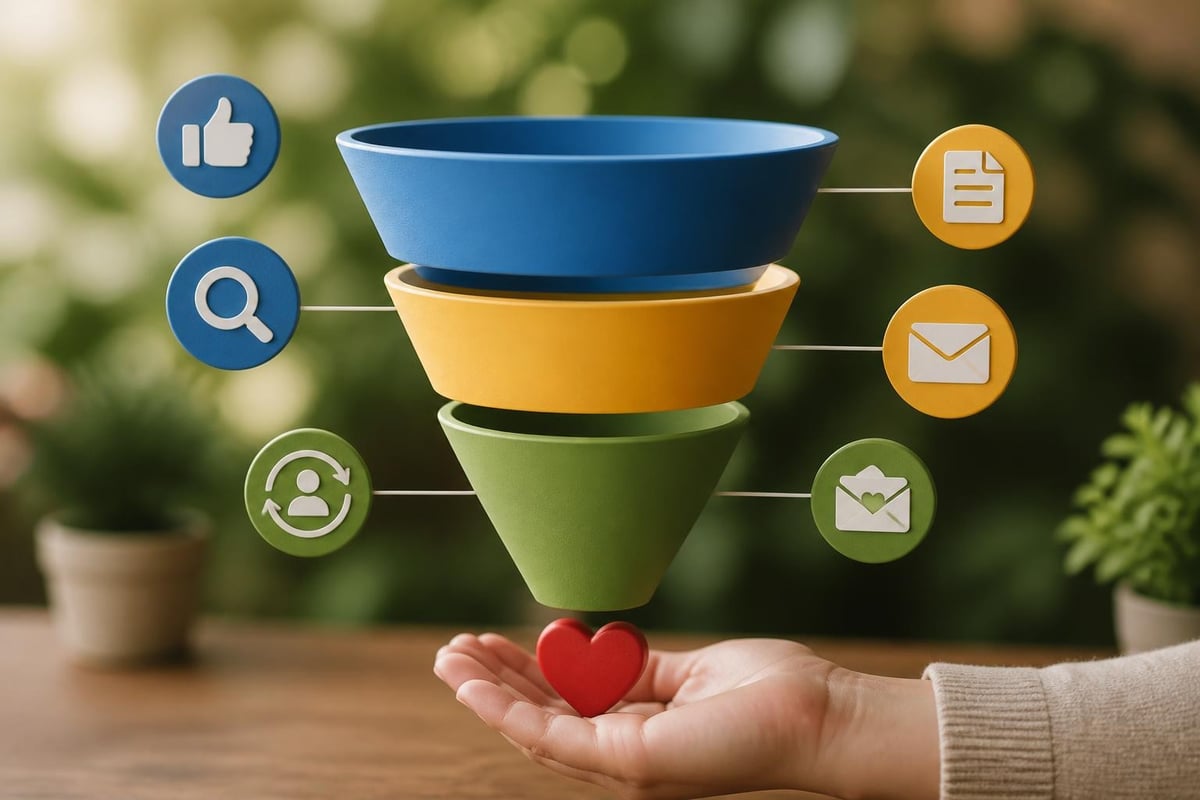
A multi channel marketing strategy only works if it connects to your broader marketing infrastructure. CRM systems should feed email platforms. Social media insights should inform content planning. Website analytics should influence paid media targeting.
This requires choosing tools that integrate or building connections between them. Mailchimp should talk to your CRM. Facebook Pixel data should inform Google Ads campaigns. Zapier or similar automation platforms can bridge gaps when native integrations don't exist.
Document your data flow. Map which systems connect to what and where information lives. This prevents data silos and ensures everyone on your team can access the insights they need to optimize their channel.
Most NGOs don't have a team of channel specialists. One or two people handle everything. This makes prioritization critical. Focus effort on the channels that drive results for your specific goals, not the ones that seem trendy.
Time allocation framework for small teams:
| Channel | Time Investment | Frequency | Priority Level |
|---|---|---|---|
| Email campaigns | 20% | Weekly | High |
| Social media | 30% | Daily | High |
| SEO/Blog content | 25% | Weekly or bi-weekly | Medium-High |
| Paid media management | 15% | Weekly monitoring | Medium |
| Analytics and reporting | 10% | Monthly | High |
These percentages shift based on your specific strategy, but the principle remains. Concentrate time where it generates measurable outcomes. If your audience doesn't engage on Twitter, stop posting there even if other NGOs do.
Threems develops marketing strategies that map channel priorities to actual organizational capacity, so you invest effort where it compounds rather than spreading thin across platforms that don't serve your goals.
Growth introduces complexity. More channels, larger audiences, multiple campaigns running simultaneously. Maintaining coherence requires systems and templates that preserve consistency while allowing customization.
Build content frameworks that adapt across channels. A core campaign message translates into an email template, social media post template, and ad creative template. Each version maintains the essential narrative while fitting platform constraints.
Establish approval workflows. Before content goes live on any channel, it passes through a brief review confirming it aligns with the current campaign's messaging and brand voice. This takes minutes but prevents off-message content from diluting your strategy.
NGOs often wonder what "good" looks like in multi channel performance. Benchmarks vary by sector and audience size, but realistic targets help set expectations.
Email marketing:
Social media:
Paid media:
Your numbers might differ based on list quality, audience warmth, and offer strength. Track your own baselines and improve against them rather than fixating on industry averages. This case study shows how multi-channel optimization delivered a 700% increase in qualified meetings by focusing on incremental improvements rather than chasing arbitrary benchmarks.
No multi channel marketing strategy launches perfect. Plan for testing from day one. Run small experiments before committing full budget.
A/B test systematically:
Test one variable at a time. If you change both the headline and the image, you won't know which drove the performance shift. Document results. Build a knowledge base of what works for your specific audience.
Run tests for long enough to achieve statistical significance. A day or two of data doesn't reveal reliable patterns. Two weeks minimum for most tests, longer for low-traffic situations.
Each platform has quirks that affect how you execute your multi channel marketing strategy. Ignoring these platform norms weakens performance even if your core message is strong.
Facebook and Instagram: Visual content dominates. Video outperforms static images. Stories and Reels get algorithmic preference. Community engagement in comments matters as much as the initial post.
LinkedIn: Professional tone, thought leadership content, longer-form posts perform well. Best for B2B partnerships, corporate giving, and professional volunteer recruitment.
Twitter/X: Concise messaging, real-time engagement, news-jacking opportunities. Declining user base means reassessing whether it deserves ongoing investment.
Email: Personalization increases engagement. Segmentation by interest or donation history allows targeted messaging. Mobile optimization is non-negotiable.
Search (SEO): Long-tail keywords, high-quality content, technical site optimization, and backlink building. Results compound over time. Read more about NGO case studies to see how integrated campaigns perform across different platform combinations.
Most NGOs face severe budget constraints. The question isn't whether to invest in multi channel marketing but how to allocate limited resources for maximum impact.
Three budget allocation models:
These aren't rigid rules. If your email list drives 80% of donations, allocate more there. If you're building awareness for a new issue, shift budget toward paid reach. Review allocation quarterly and adjust based on performance data.
Producing enough content to feed multiple channels feels overwhelming. The solution isn't creating more content. It's repurposing strategically.
One substantial piece of content, a report, long-form blog post, or video, becomes:
This content atomization approach maximizes the value of each production investment. Learn how comprehensive multi-channel campaigns coordinate content across touchpoints efficiently.
Create less, distribute smarter. One exceptional piece of content distributed across five channels outperforms five mediocre pieces each confined to one channel.
A multi channel marketing strategy stops being theoretical the moment you map your first campaign across platforms with connected messaging and shared goals. Most NGOs already use multiple channels but operate them independently, missing the compounding effect of coordination. If you're ready to build digital presence that actually drives action across every touchpoint that matters, Threems Agency works with NGOs and purpose-driven organizations to develop and execute marketing strategies where every channel reinforces the mission. We handle the complexity so you can focus on impact.